Context
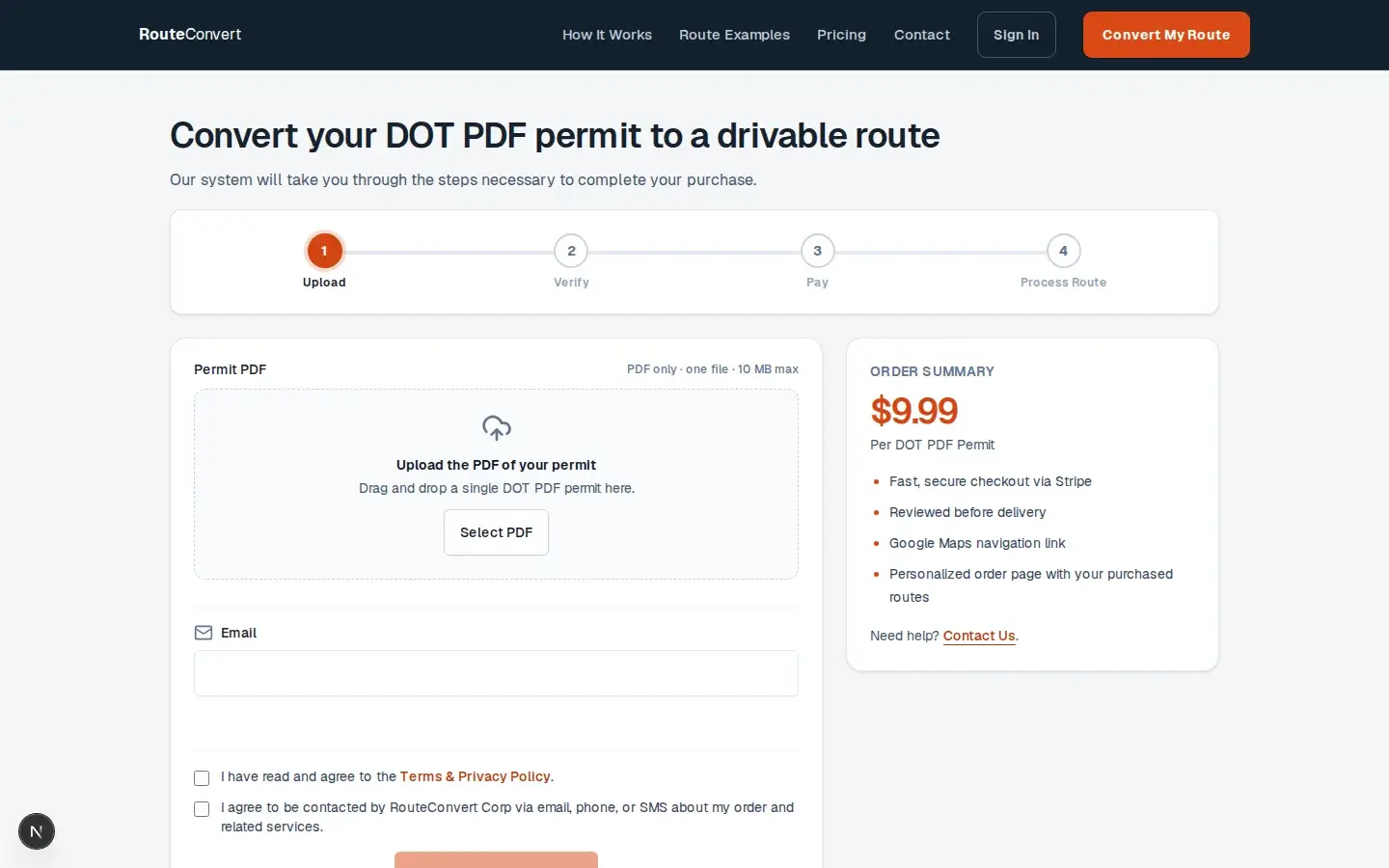
In the US, trucks hauling oversize or overweight loads need a permit from each state they cross. The permit dictates the exact roads the truck may use, and every state issues it through a different system, in a different format, as a dense PDF built for compliance officers, not drivers.
The problem
Turning that PDF into an actual route was manual work: someone reading the permit line by line and rebuilding it in a maps app. Slow, error-prone, and high-stakes. A wrong route can mean a bridge strike, a fine, or a revoked permit.
What I owned
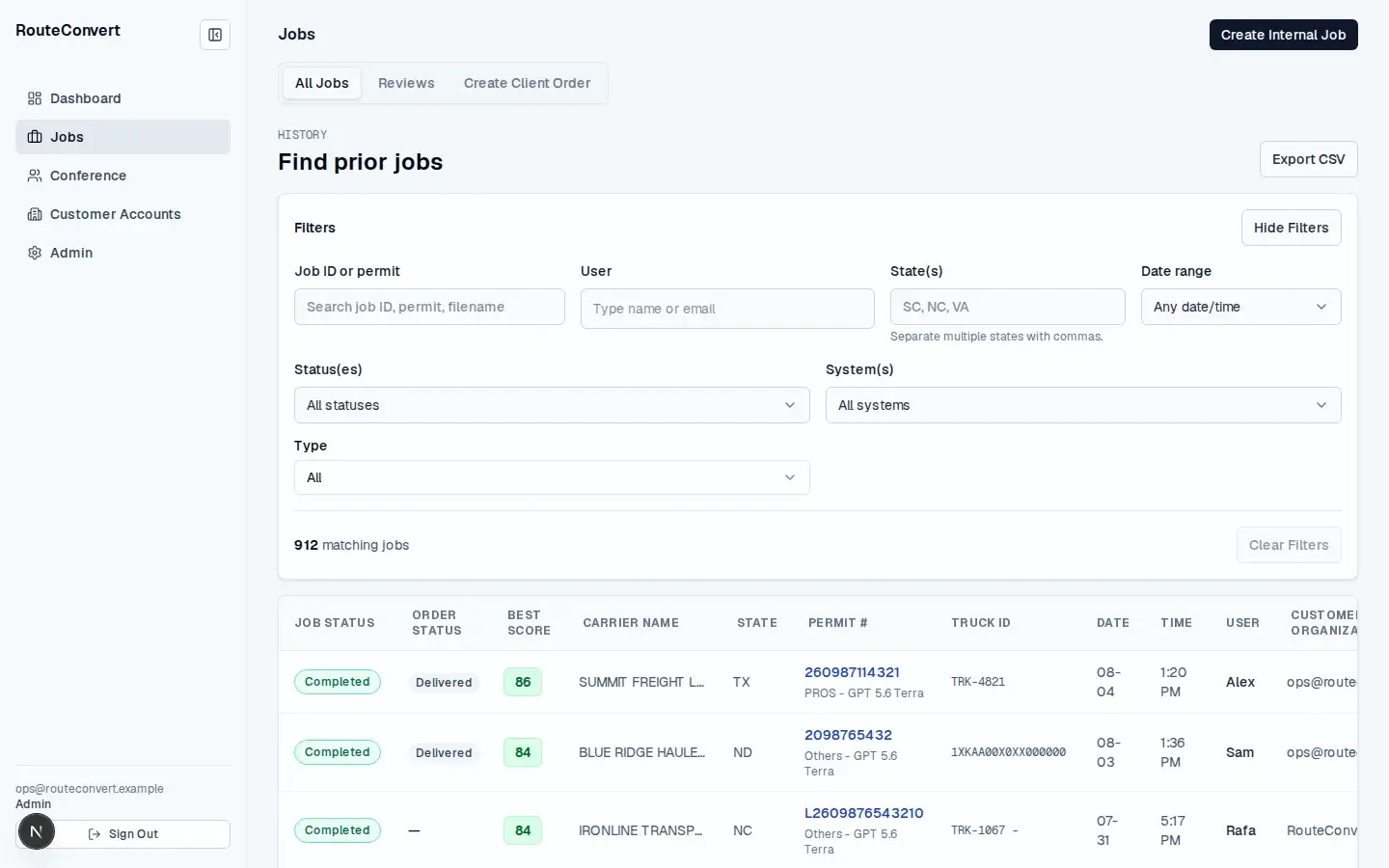
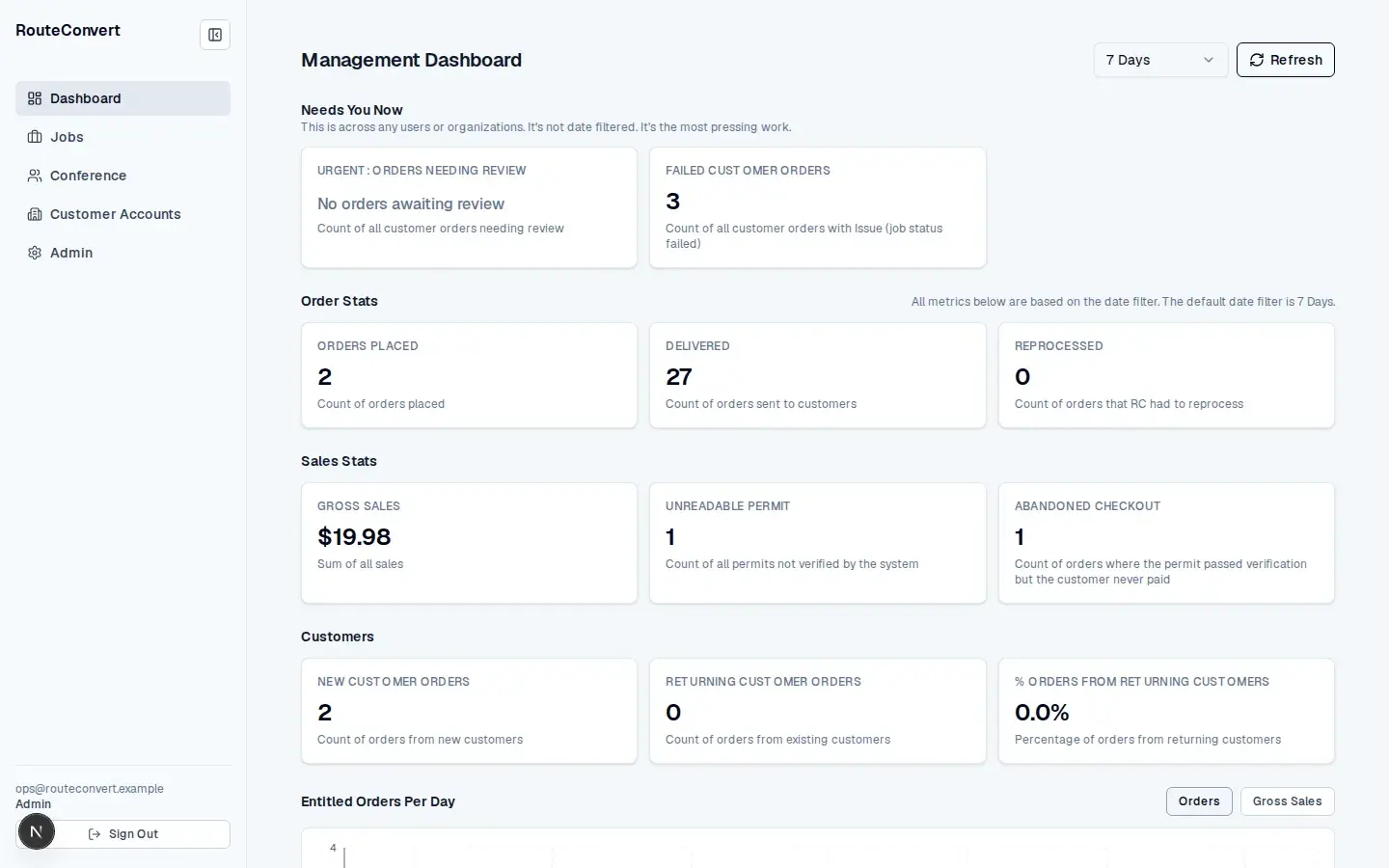
The entire system, end to end: from the first research spikes through architecture, agent-directed implementation, acceptance and production reliability. Payment and ordering flow, the AI pipeline, the routing logic, the review tooling, and the tests.
How it works
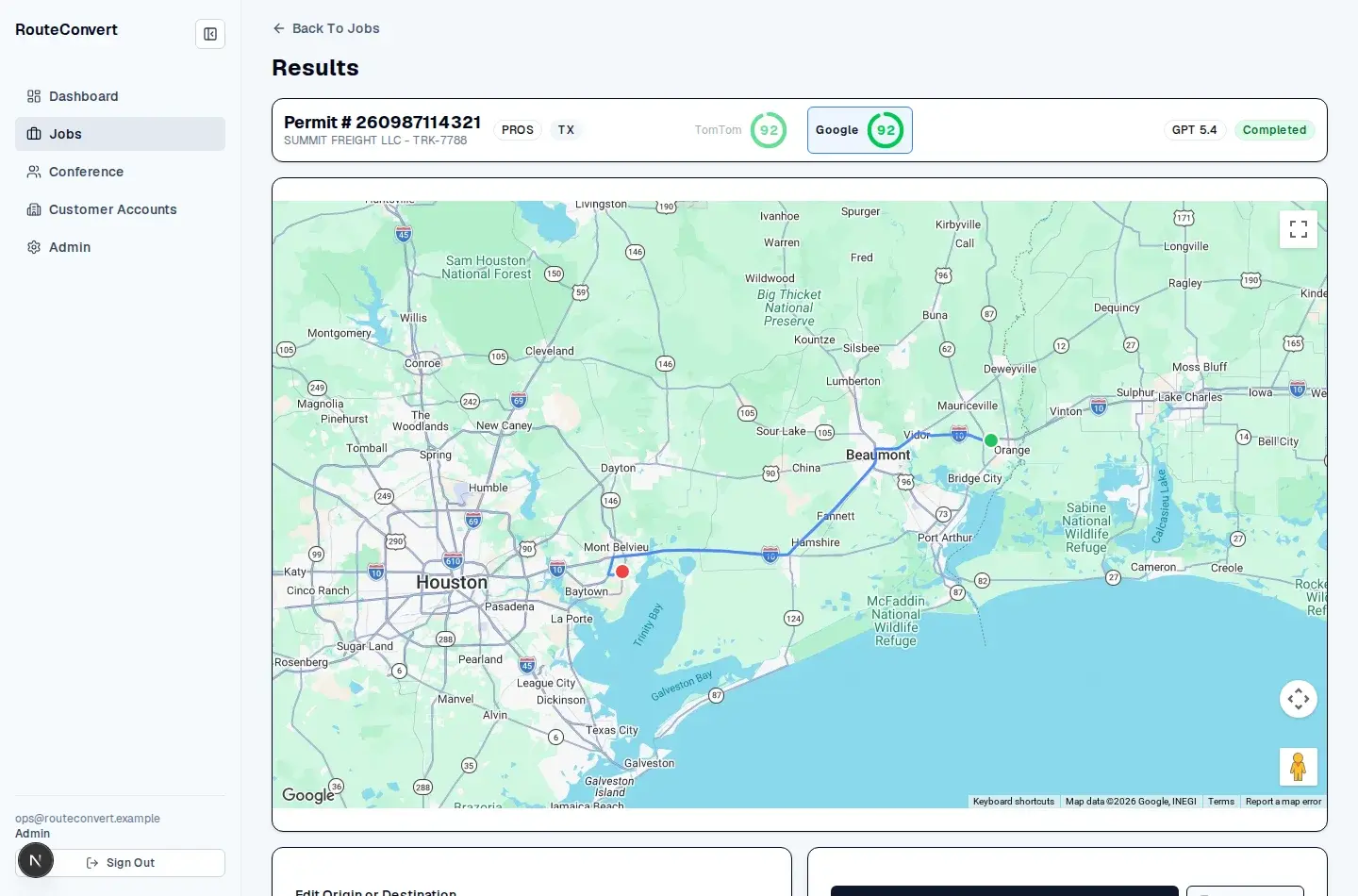
An AI agent (a tool-calling loop with geocoding, routing, and validation tools) reads the permit and proposes the route. Candidate routes are then scored by deterministic rules: how far the route deviates from the permitted distance, whether it stays inside a corridor around the permitted roads, whether it ever leaves the state. Low scores never reach a driver. A human reviews and can override waypoints before anything is sent.
Key decisions
- Exact geometry comes from the source, not the model. The AI kept producing subtly wrong routes, U-turns around off-ramps that no amount of prompt iteration fixed. I recognized this wasn't a prompting problem: exact geometry can't depend on a probabilistic model. Where states embed a QR code in the permit, the pipeline now decodes it (computer vision) and fetches the official route from the state's own system.
- Benchmark before committing. Before building the production pipeline, I ran a structured experiment: a linear single-pass pipeline vs. an agentic loop, across five different AI models, on the same set of real permits, with a written results report. The agentic approach won on complex permits and became the architecture.
- Guardrails are code, not prompts. Score floors, corridor checks, state-boundary guards, and per-job API budgets are all deterministic. The AI proposes; the rules dispose.
- A human gate before delivery. Staff review low-confidence routes with a live processing feed and a waypoint editor. Failures are logged and surfaced, never silently retried.
Verification & reliability
The system carries roughly 280 automated test files: unit and end-to-end tests on the web side (Playwright), a full test suite on the Python pipeline (route simplification, state-boundary logic, error-recovery loops, output contracts), database security tests, and CI on every change.
Outcome
Route accuracy rose from ~60% to ~97% after route geometry moved to deterministic code. In production today with a self-serve ordering flow and payment, plus an internal operations dashboard for the team. Drivers receive exact, trustworthy navigation built from permits that no two states format alike.
What I'd improve today
I spent weeks trying to prompt my way to reliable geometry before moving it into deterministic code. I'd make that call earlier now. Next on the list: extending official-route extraction to more state systems.